
What We Paid for a Ghostbusters 4 oz Silver Bar at Auction (Every Number)
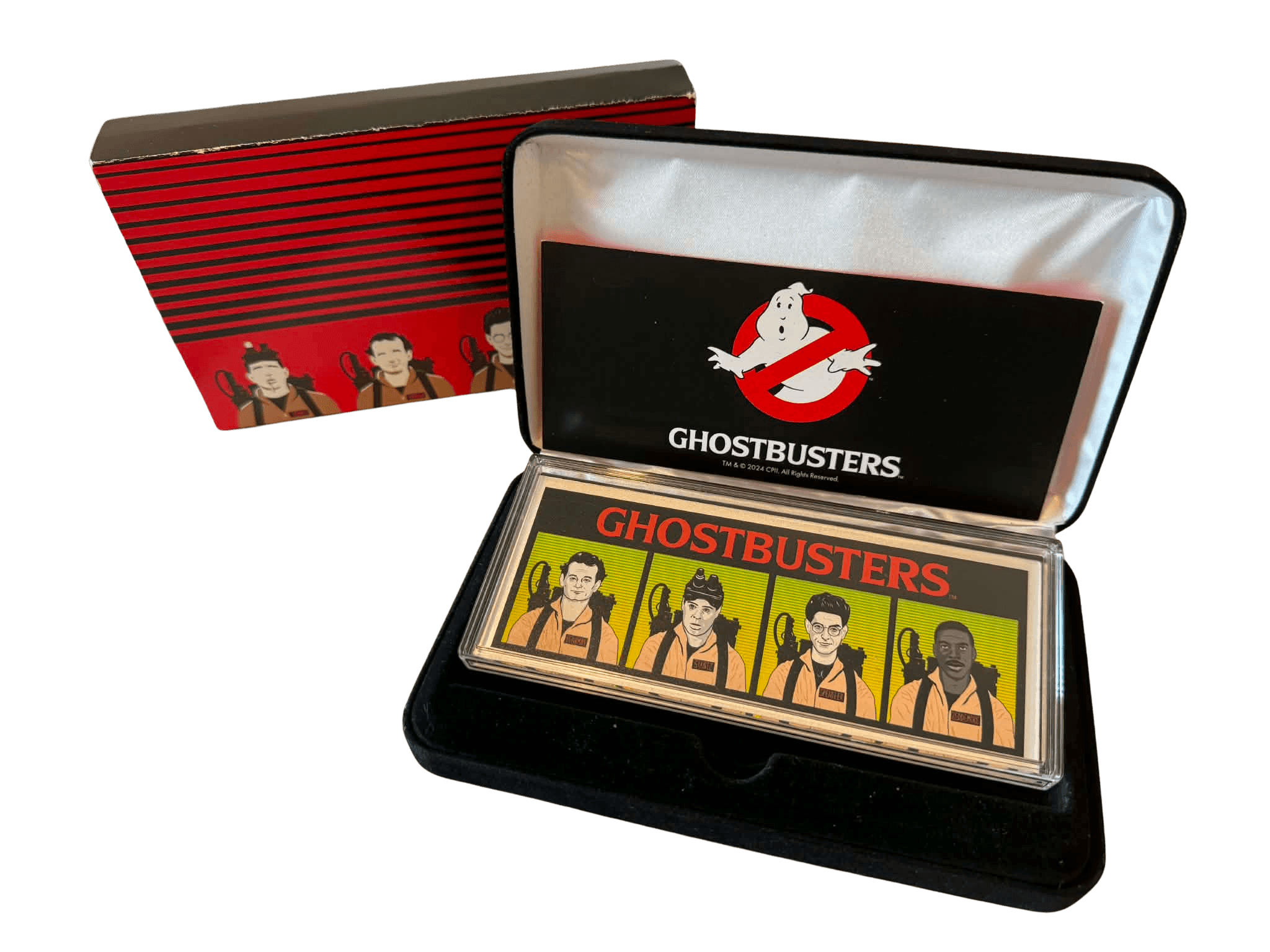
We're going to walk you through one of our own auction wins, and because it's ours, take it with the grain of salt it deserves. It's one good lot, not a promise of what every lot looks like. But every number is here, so you can check the whole thing yourself, which is the only way we'd want to show it to you anyway.
Here's the short version: recently we went through a whole auction lot by lot, set an all-in ceiling on each thing we wanted using the tool, bid up to that ceiling and not a dollar past it, and let everything that blew past its ceiling go. This is what we walked away with. A 4 oz full-colour .999 fine silver bar marking the 40th anniversary of the original 1984 Ghostbusters, a Niue issue, an ounce of silver for each of the four team members. Only 400 of these were ever made, so it's extremely limited, the kind of thing you mostly don't find for sale at all. We paid CA$416.95 all-in, which on that day was essentially the price of the silver in it, no premium over the metal at all. (Spot moves, so the melt value floats with it, but our all-in was locked the moment we won it.) On the rare occasion you can find one, the cheapest we could turn up was around CA$600 plus shipping, call it about 45% over what we paid.
We'll be honest: Ghostbusters is one of our favourite films from childhood, we've watched it well over 200 times, so we were thrilled to win this particular one. But the fun is one thing. The price is another, and that's where the tool comes in.
So we paid for the silver and got the collectible for nothing. Here's how that happened, and why the math is the only reason we could bid with any confidence.
Why it was cheap
The case had damage. The listing said so plainly: the lid of the display case showed wear and some damage. We can't tell you exactly why it went as cheap as it did, nobody can read the room for sure, but the case damage was probably part of it. If you're buying it as a pristine collectible in its box, a damaged case matters. We wanted the bar, not the box. Four ounces of .999 silver is four ounces of .999 silver whether the case is mint or scuffed, so a flaw that mattered to other people didn't matter to us, and the metal underneath was untouched.
That's a normal way deals happen at auction. Not magic, not a steal nobody noticed. Sometimes a flaw scares off part of the room, sometimes the bidding's just quiet that night. Either way, the point isn't guessing why, it's knowing the all-in number so you recognize a good price when it's in front of you.
The numbers, in order
Here's the breakdown that settled it, the same all-in stack the tool runs on every lot:
- Hammer: CA$340.00
- Buyer's premium (18%): + CA$61.20
- Shipping: + CA$15.75
- All-in: CA$416.95
Now the comparison that matters, and this is the part to sit with. The melt value that day, the metal content times spot, was CA$418.18. Our all-in was CA$416.95, and that figure already has the 18% premium and the shipping baked into it, not just the hammer. So even after the fees that normally push an auction buy well past spot, we still landed about a dollar under what the silver alone was worth. That's the whole trick: the hammer being under spot means nothing if the premium drags you over, and here it didn't. We paid spot for the metal, with the colourized limited-edition bar essentially thrown in for free.
Against normal metal retail, what you'd pay a dealer for that much silver in bullion form, the figure was CA$497.64, and our all-in was 16% under it. Those are the tool's numbers: it graded the lot at melt, and 16% under metal retail. That's all metal. (Spot, retail, and all-in are three different numbers, and the tool keeps them straight, which is the whole point.)
The number the tool doesn't give you
Here's where we're careful, because this is exactly the spot where these stories usually cheat.
Everything above is the metal. The tool grades silver content against spot and against metal retail, and that's all it claims to do. It does not, and shouldn't, put a price on collectibility. So when we tell you the cheapest we could find this exact bar listed for elsewhere was around CA$600 plus shipping, roughly 45% over what we paid, understand that's our read of the secondary market, not something the app told us. A limited 1-of-400 colourized piece carries a collector premium on top of its silver, and that premium is real but it's a separate thing from the metal math.
So the honest way to say it: on the metal alone, we bought four ounces of silver for spot, which the tool confirmed cold. The collectibility on top was gravy, and that part is our judgment, not the tool's. We keep those two apart on purpose, because blurring them is how you talk yourself into a bad bid.
(One small bonus on this one: as a .999 bar it was tax-exempt, no sales tax on top, which a colourized novelty might not have been if it were lower purity. Purity earns the exemption, not the theme.)
Why this is the post
The hammer was CA$340. On its own that number tells you almost nothing, because the hammer is never what you pay. It was the all-in, CA$416.95, set against melt and against retail, that told us this lot was a genuine deal and not just a cheap-looking bid. That's how we set the ceiling on it before the bidding even started: we knew the all-in number that kept it under retail, so when the hammer climbed, we knew exactly when to stop, and on this one it never reached our line. Without that, we'd have been guessing, and guessing while an auction moves fast is how you overpay on a lot that looked like a win.
That's the entire reason we built the tool. Not to promise magic, just to run the all-in honestly on every lot in a sale so we can set a real ceiling on each one, and when a genuine deal shows up, flaw in the case and all, recognize it and stop at the right number instead of chasing it.
The hard part is finding them
Deals are normal, not the exception. Plenty of people buy metal at coin and bullion auctions, and on every sale we've put through the tool there have been items that sold under spot and under retail. Some sales have many, some have fewer, but there are always some. The catch is finding them, fast. A catalog can have hundreds of lots, the bidding runs all week, and the picture keeps changing as bids climb. Dealers work catalogs exactly this way to find the underpriced lots, but they do it by hand, lot by lot, which is slow and easy to fall behind on. The tool does the same thing quickly and saves you the time and effort: download the fresh printable catalog as the week goes, drop it in, and it re-grades every lot against the current bid and live spot, so the deals stand out at a glance instead of after hours of manual math. A lot that was a deal on Monday might be bid past its ceiling by Thursday, and something quiet can turn into the deal of the sale late. The only discipline left after that is on you: set a real all-in ceiling on each lot you want, and walk when the bidding climbs past it, instead of falling in love with a piece and chasing it past what it's worth.
You don't have to take our word that the deals are there, either. You can run a past auction through the tool and see exactly which lots sold under spot and under retail, as long as the catalog you grab has the closing bids in it. It's a good way to trust the numbers before you bid real money, and to train your own eye. (Here's how to check a past auction.)
This Ghostbusters bar isn't even the first lot the tool's brought home for us, it's just the most fun to show. The colourized-novelty angle is what makes it fun, but it's not the typical lot. A lot of these auctions are bullion-only, or large lots of plain bars and coins, and that everyday bullion is exactly where the all-in math earns its keep. Run it on every lot, the deals stand out, and you bid on what you want with the actual numbers in front of you instead of a guess. This was a good one.
If you want to run the same check on a lot you're eyeing, Quick Check is free and does exactly what it did here: hammer, premium, shipping, against melt and retail, before you bid. And the free tier currently covers 400 lots, which is a whole typical catalog, so you can grade an entire sale without paying anything. The paid tiers are just for higher volume, more catalogs, because of the real costs behind running it. But honestly, a single lot won under spot can cover the subscription many times over. We won this one because the math was sitting in front of us when it counted, with a ceiling we'd set before the bidding got going. That's the only edge we've got, and it's the one we'd hand you.